




After 12 months of intense work, inspiring and truly constructive exchange, and a transformative process of co-design and co-implementation, the European Erasmus+ project ILEARN “Innovative Learning Environments for Adult Refugee Needs” as such has reached its completion.
In these 12 months,
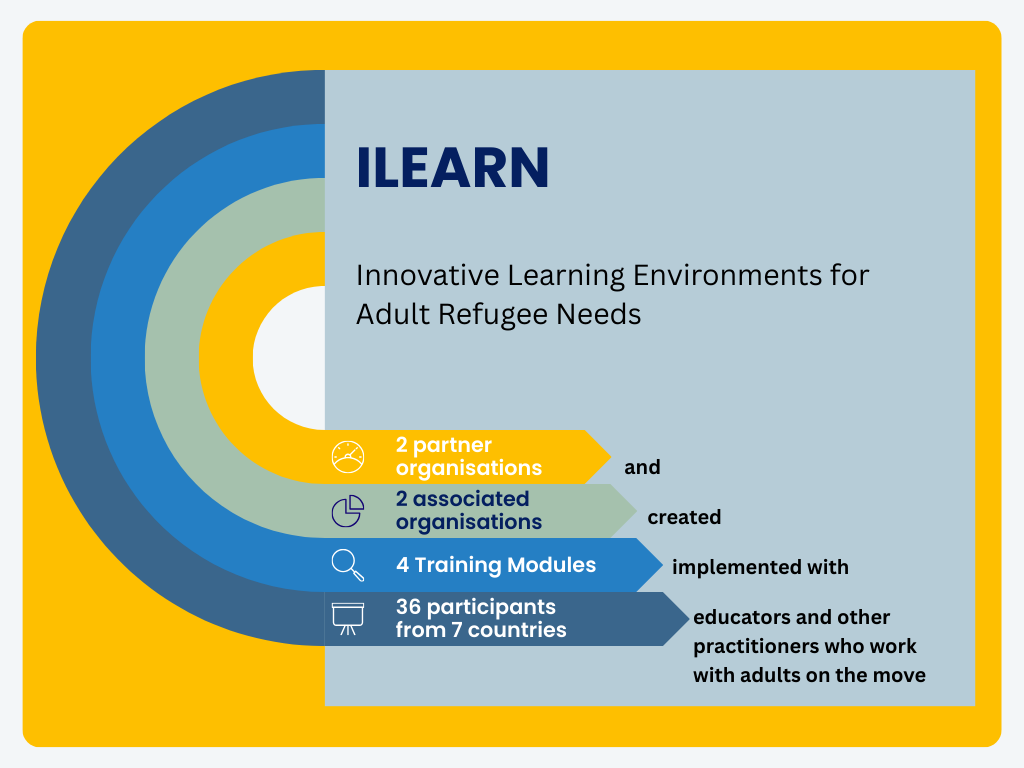
2 partner (Dråpen i Havet and ELIX) and
2 associate organizations (Kalamata Second Chance School and University of Bergen) created
4 training Modules implemented with
36 participants (educators and other practitioners who work with adults on the move) in
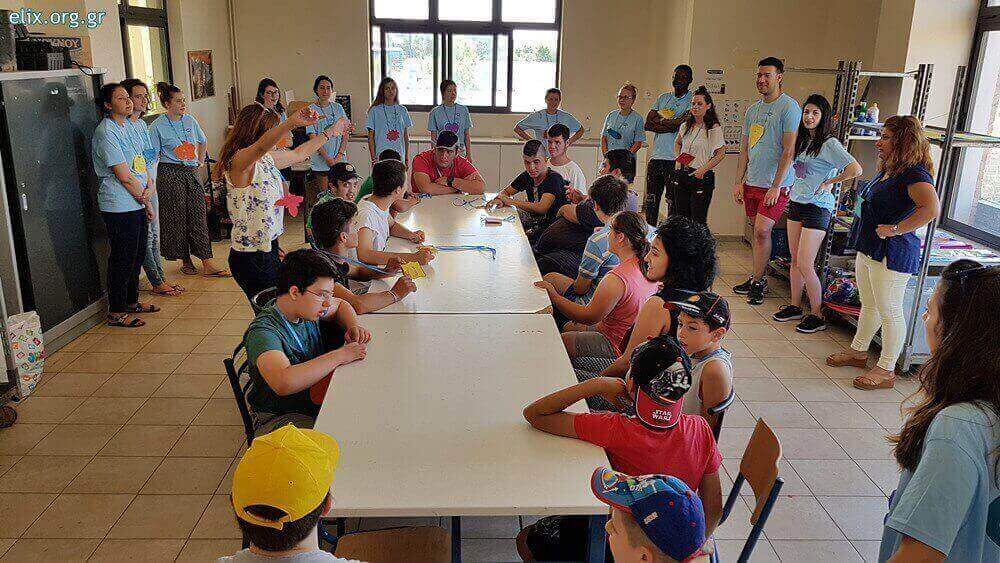
6 distinct training cohorts (2 in person trainings in Athens & Thessaloniki and 4 online trainings) during
192 overall hours (4 days full-time for each cohort) of training.
Participants joined online training from across 7 countries (Greece, Norway, Canada, the U.S, Croatia, Spain and Iraq), while diversity in terms of ethnicity, gender, race and status was actively supported in all cohorts.
The partnership itself brought together professionals across the fields of education, training, research, and community-based practice, bridging formal and non-formal learning environments and united by a shared commitment to equitable, inclusive and learner-centered education.
Drawing on diverse institutional roles, pedagogical approaches, and national contexts, the consortium developed a holistic perspective to address the commonly identified need for clearer guidance and structured support to educators working with adults on the move.
Since January 2025, the consortium worked collaboratively on designing, delivering, monitoring, evaluating, re-adjusting, and documenting a comprehensive course consisting of the 4 following Modules:
- Culture and Gender
- Integration and Empowerment
- Teachers, Curricula and Pedagogy
- Connections to Formal Education
Across all Modules, emphasis is placed on the promotion of identity-informed practices, holistic and experiential learning, participatory and cooperative methods, anti-racist and decolonial approaches, and the creation of safe and inclusive spaces.
Modules can be re-sequenced and reshaped, delivered autonomously or as a whole, offline or online, in response to the lived experiences, linguistic repertoires, aspirations, contexts, and resources that learners bring with them.
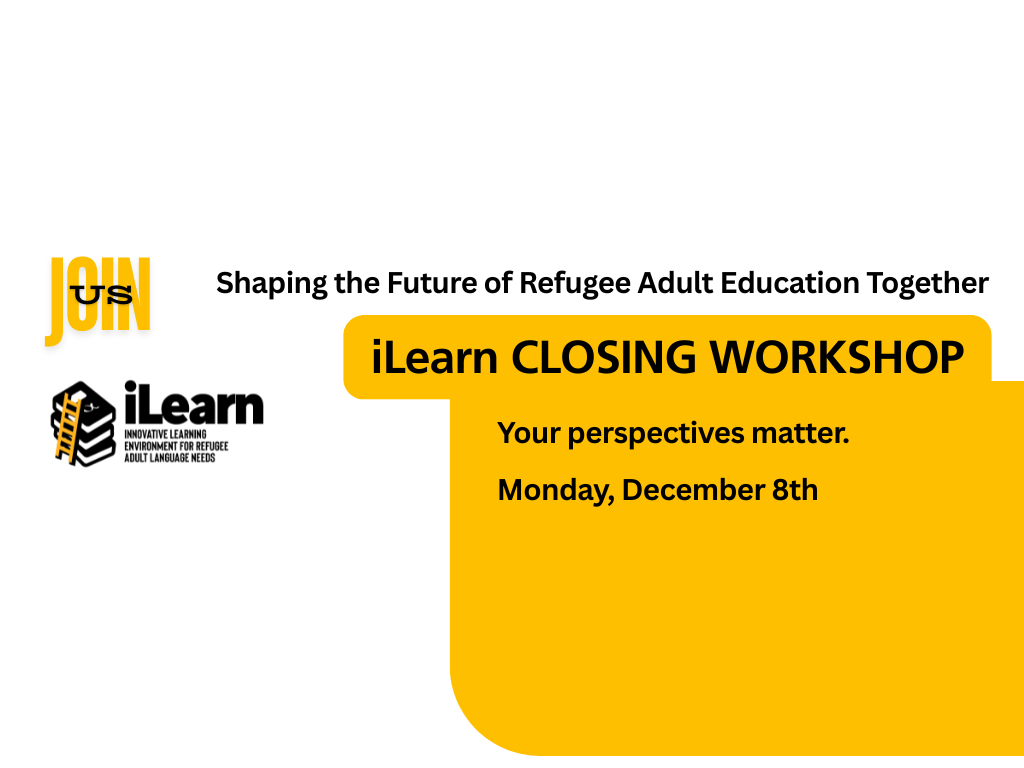
Program results and outputs were shared during an interactive final workshop on Monday the 8th of December 2025, met with enthusiasm by both experienced practitioners and those who are new in the field.
Finally, the “ILEARN Guide for Trainers who train educators and other practitioners who work with adults on the move” was published in the end of December 2025, containing the full methodology and activities guide of the course and active links to all training material (Slides, Worksheets and Cards, and Appendices of Terms & Concepts). The ILEARN Guide constitutes a flexible educational resource for trainers, intended to support reflective facilitation and informed decision-making in complex educational contexts, contributing to more inclusive and responsive learning environments across formal and non-formal settings.
It is available on the ILEARN webpage and we are sincerely proud to invite everyone to use it, reflect on it and continue the learning.
The project is supported through the ERASMUS+ Small-Scale Partnerships program.
This project is co-funded by the European Union.